

When a museum is run entirely by volunteers, its website has two important jobs. It needs to help people discover what the museum offers, and it needs to make life a little easier for the people keeping everything going.
That’s what we focused on when we redesigned the website for the Paris Museum & Historical Society in Paris, Ontario. Founded in 1972, the museum has spent more than 50 years preserving local history. Today, its collection includes more than 40,000 objects and archival documents, all cared for and shared through the dedication of its volunteers.
This project was especially meaningful to me because I grew up in Paris. We’ve worked with organizations all over the world, but getting to help tell the story of a place so close to home was pretty special.
Help visitors find what they came for
Someone planning a family visit has different questions from someone researching an old property, looking for a historical photograph or wondering how to volunteer. A good museum website needs to make room for all of those people without making them dig for the basics.
The museum’s previous website had been maintained by volunteers, and over time there was an opportunity to organize its growing information more clearly. A few people on the museum team recognized that and made the website a priority when donated funding became available.
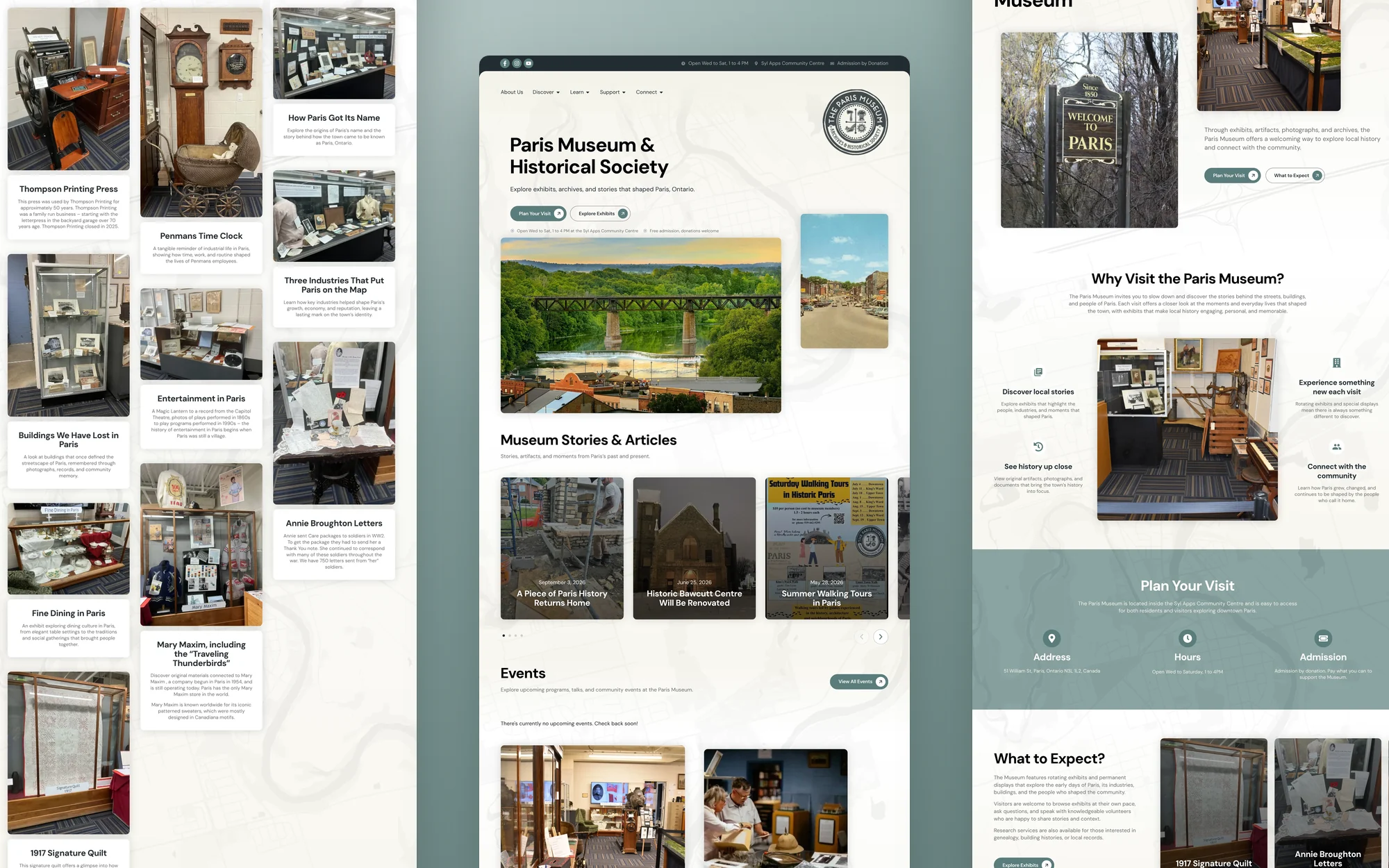
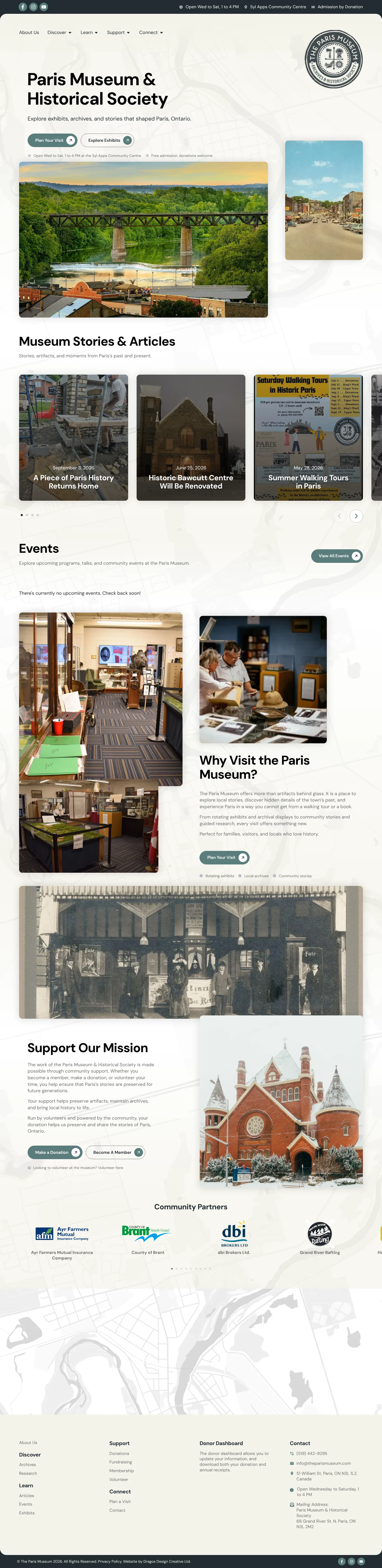
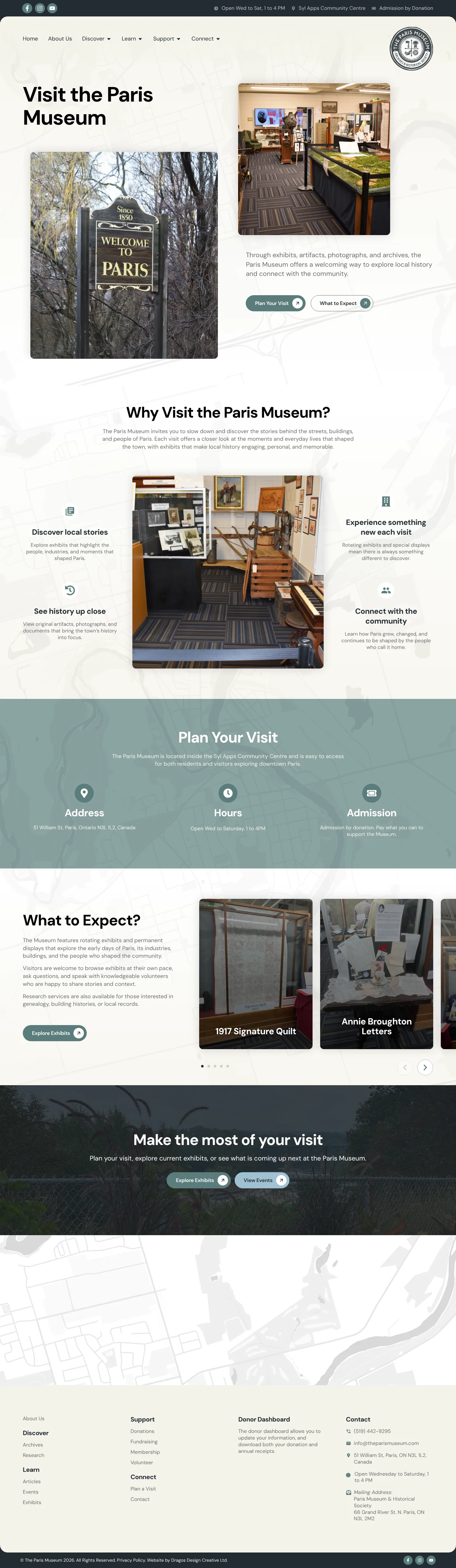
We refreshed the main pages and organized the content around what visitors actually need. It’s easier to find information about visiting the museum, exploring exhibits, accessing archives, researching local history and getting in touch. We also connected the museum’s Facebook, Instagram and YouTube channels so people can keep up with what’s happening beyond the website.
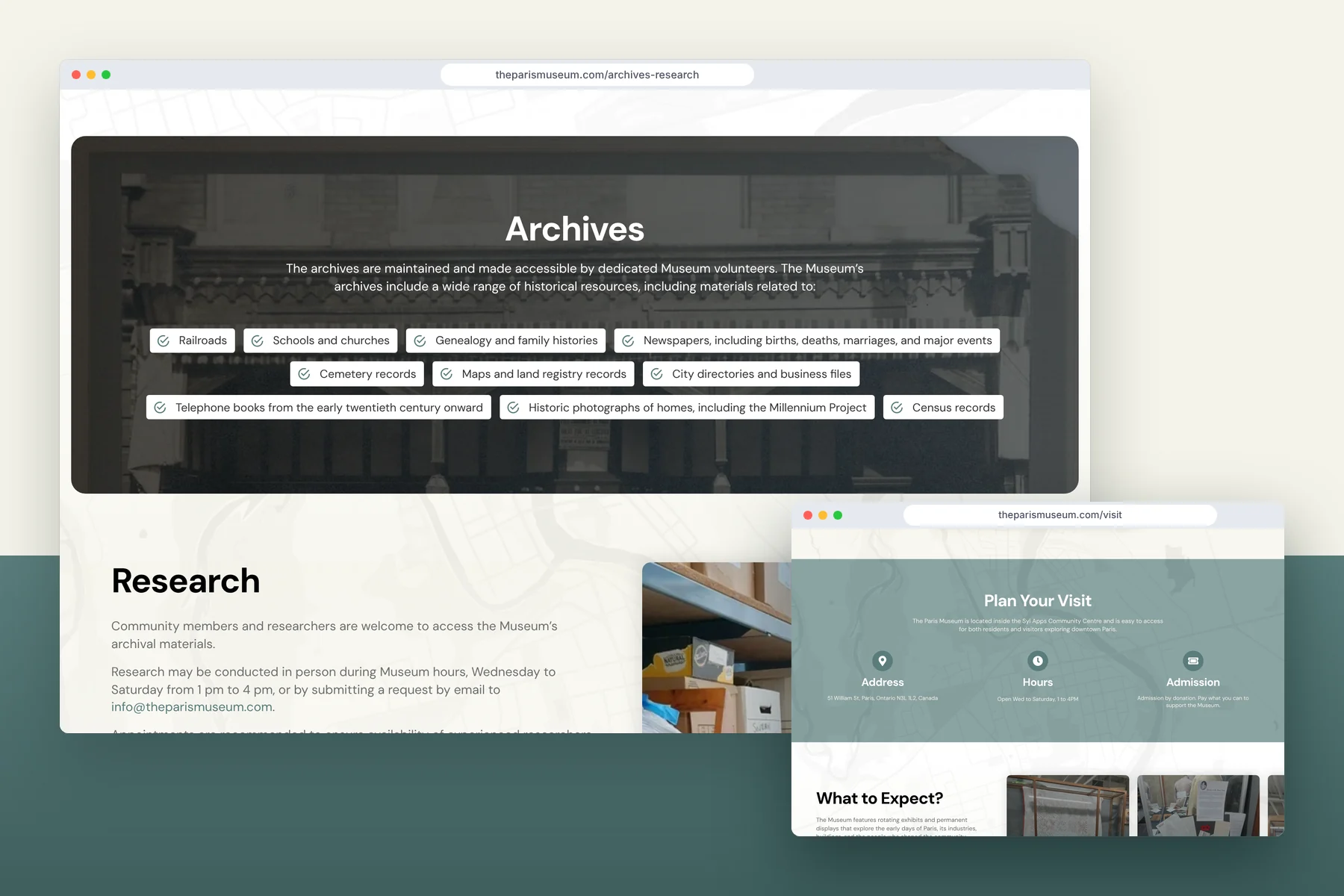
For an organization with so much history to share, clear organization matters. People should be able to get a sense of what’s available and know where to go next.
Make it simple for people to get involved
A museum like this relies on more than people walking through the door. Memberships, donations, fundraising and volunteer involvement all help keep the work going.
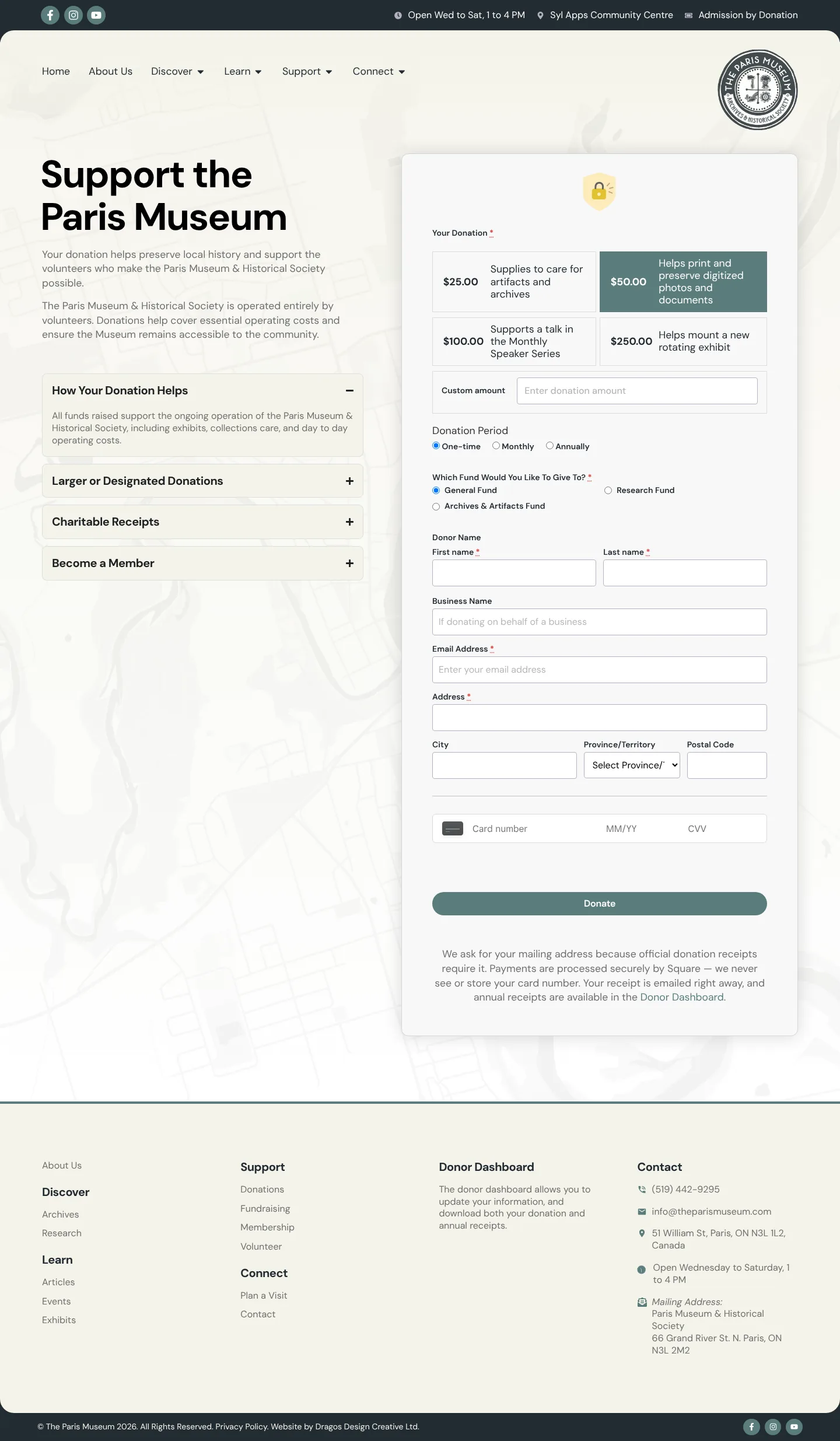
We gave each of those opportunities a clearer place on the website. Visitors can explore membership options, learn about volunteering, find fundraising information or make a donation without having to figure out whom to contact first.
We also integrated Square for online payments and built supporting tools to collect and organize member and donor information. The donation experience gives supporters a way to contribute online, including recurring giving options.

The important part isn’t simply adding more forms or buttons. It’s helping someone who cares about the museum take that next step while keeping the information manageable for the volunteer team.
Give the volunteers useful tools behind the scenes
One of the most interesting parts of this project is something most public visitors won’t see: the custom membership dashboard.
Members can access their contribution information, find tax receipts and see updates shared by museum leadership in one place. We also built supporting functionality to help the museum organize donor and membership records and streamline its year-end donation receipt process.

This took some figuring out at the beginning. We had to work through what the dashboard actually needed to do for both members and volunteers, then combine existing tools with custom functionality to bring it together.
That distinction is worth thinking about if you run a nonprofit or membership-based organization. Your website isn’t only a place where people sign up or donate. Someone on your team needs to manage those records, answer questions and handle receipts afterward. Designing for that part of the experience can be just as valuable as the public pages.
Give the design a sense of place
I wanted the website to feel like Paris, not like a generic museum template.
The museum supplied its existing branding and historical photography, and we built a welcoming colour palette around those materials. We also brought in details inspired by old road maps and the Grand River running through downtown Paris.
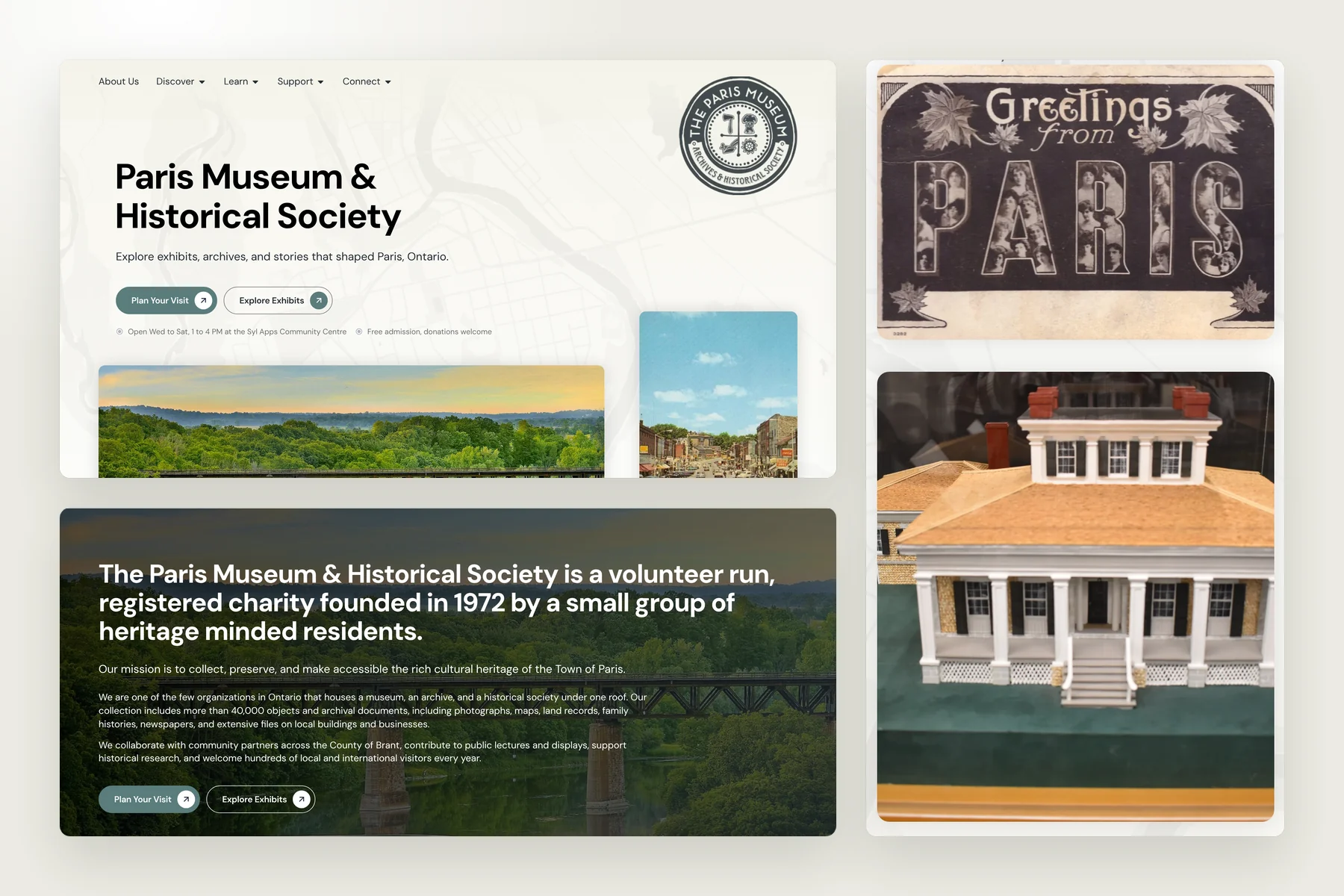
Those little touches are probably my favourite part of the design. They give the website character without getting in the way of what people came to do. The museum doesn’t need to look bigger or more corporate than it is. Its local history and the people who preserve it are already a pretty compelling story.
Build for the people who visit and the people who keep it running
If you’re involved in a volunteer-run museum, charity or community organization, I’d start with two questions: What do people most often come to your website to find or do? And what work does your team have to handle after someone fills out a form, joins or makes a contribution?
Both sides matter. Clear pages help the public understand and support your mission. Practical tools behind the scenes can help a small team manage that support without adding unnecessary work.
What I appreciated most about the Paris Museum project was the initiative of the volunteers who championed it. They knew how much care went into their organization and wanted the website to reflect that same care. We were happy to work alongside them and give this little piece of Paris history a welcoming home online.



If your organization is considering something similar, you can explore our website design services or tell us about your project.