

If you’re planning a new website, you may know what you want it to do before you have all the marketing material ready. Product descriptions may still need writing. Photography may need planning. Some future ideas may still be taking shape.
You can begin by defining what the website needs to accomplish and developing the content around that. Agreeing on what the first version needs to explain gives the project a useful starting point.
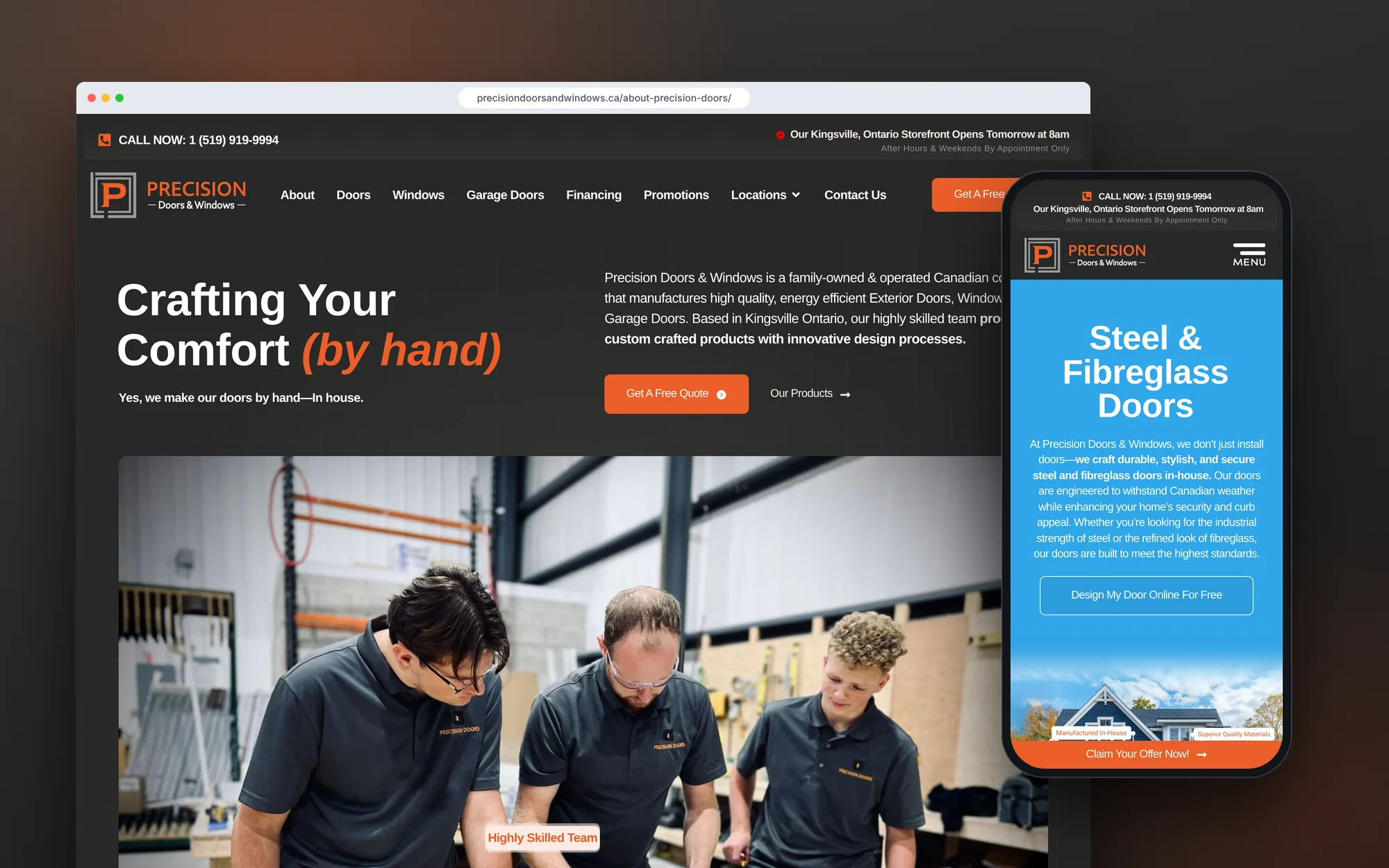
Our work with Precision Doors & Windows, a locally owned window and door company in Ontario’s Leamington and Kingsville area, took that approach. The project brought together a rebrand, custom content and a new website, with the original launch in November 2024.
Start with what your team already knows
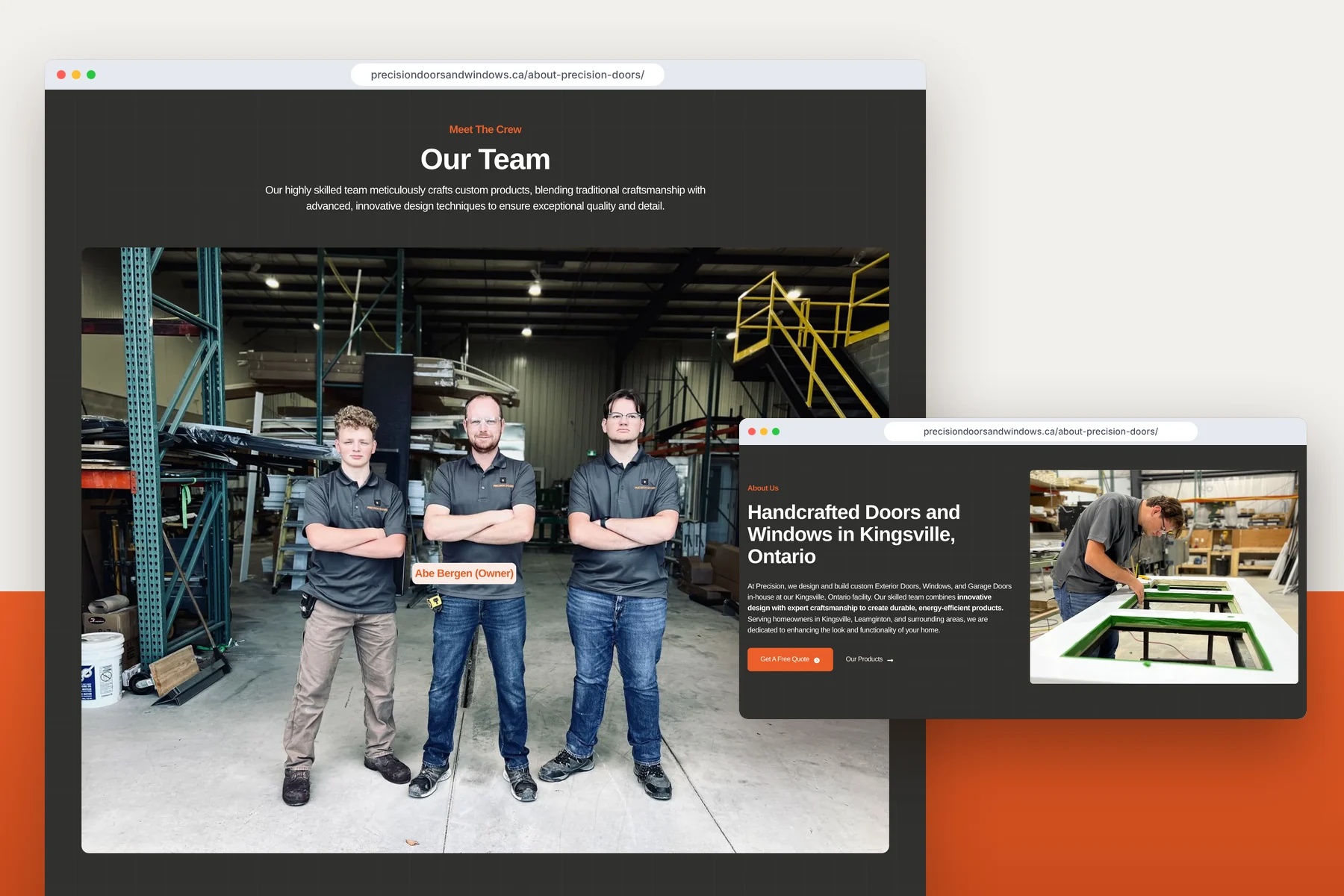
When I first met Abe Bergen, the owner, I was drawn to his excitement about where he could take the business. Precision was manufacturing custom doors locally and installing windows and doors throughout the region. The team was also developing its production facility and looking at opportunities in larger markets.
Abe had a clear vision, and his willingness to collaborate became an important part of the project. There wasn’t an extensive collection of professional photographs, product descriptions or marketing materials to work from, so much of the content began with conversations.
We asked questions, learned about the products and manufacturing process, and worked through which differences mattered to homeowners. Abe and his team brought the product knowledge. We helped turn it into information a customer could understand.
For a business selling custom products, that knowledge is a valuable starting point. The people making, installing and selling the products often know which questions customers ask. Capturing those answers can be part of developing the website.
Give the products a clear written and visual story
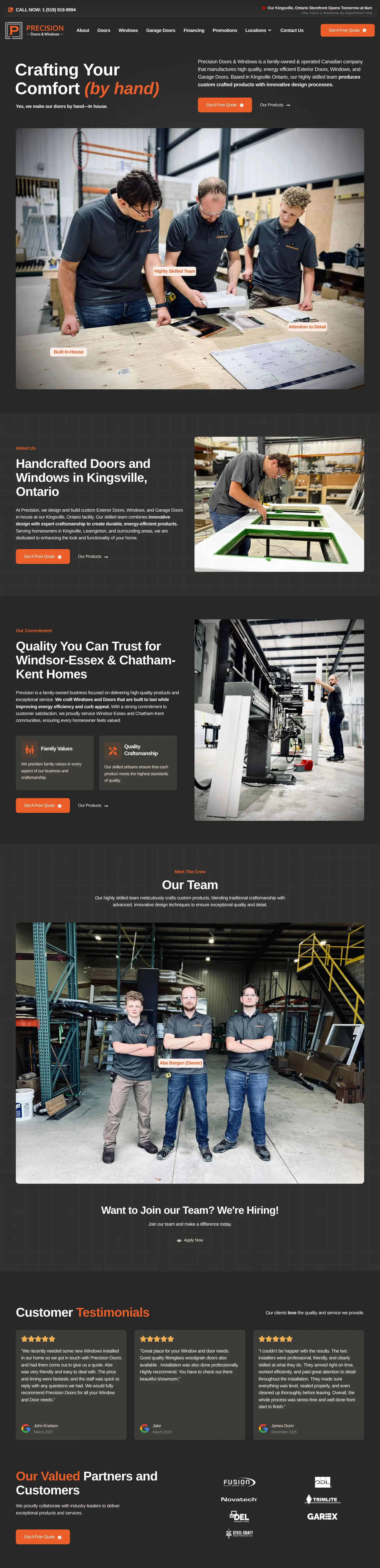
Precision’s custom doors and frames needed content that reflected how the company actually worked. We developed written information explaining its products, services and manufacturing process, with a focus on the details that would help homeowners make sense of their options.
That included content about materials, durability and long-term value, shaped around practical concerns for homeowners in Southwestern Ontario.
We also gave key product information its own written space on the page. Important explanations should be available as readable text alongside the images. That gives visitors useful context and helps search engines understand the subject of the page.

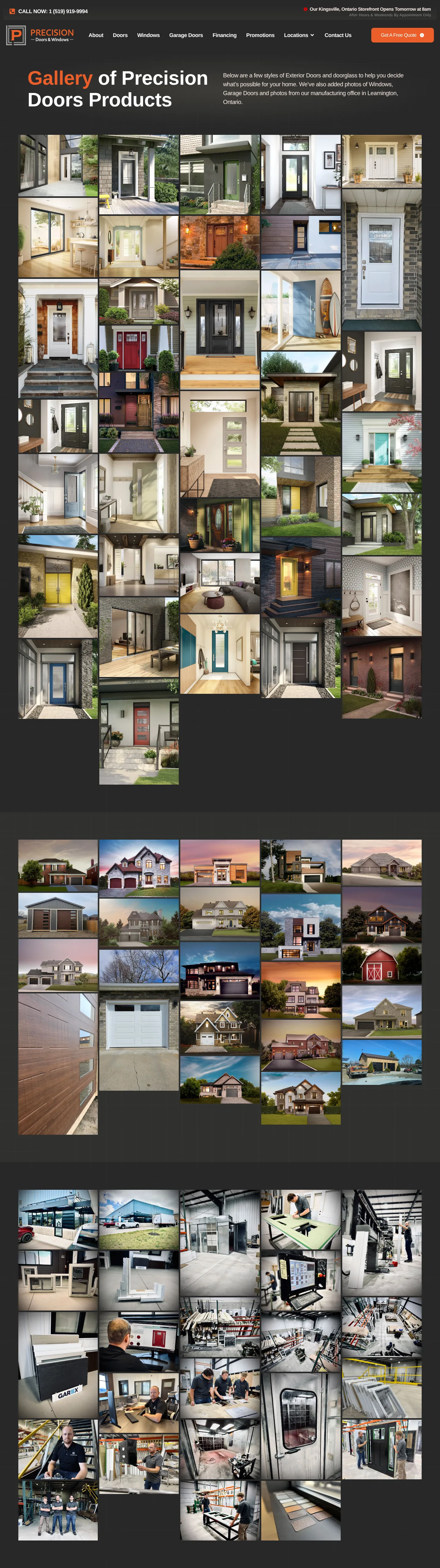
Photography and behind-the-scenes production footage added another part of the story. We helped coordinate professional photography, and the website brought together images of the products and work with a closer look at the craftsmanship and people behind them.
A photograph can help someone picture a door on their home. The accompanying description can explain what they’re looking at and what they might want to ask about. Planning those pieces together gives the page a clearer purpose.
Agree on what the first version needs to do
We focused first on the branding, core pages, written content and customer experience. The refreshed logo and visual identity gave Precision a consistent way to present itself, while the product information helped explain the business.
Developing the branding and website design together meant those decisions could inform one another as the project took shape.
The initial customer journey had a straightforward purpose: help homeowners understand what Precision offered, see the quality of the work and contact the team. Clear quote requests and enquiry forms supported that next step.
That gave the first phase a defined scope. The core information and contact experience needed to be ready for launch. Additional location content, seasonal promotions and future ideas could be developed as the business’s priorities became clearer.
For an owner planning a similar project, agreeing on that first phase helps everyone understand which content and decisions need attention now.
Expand around real business opportunities
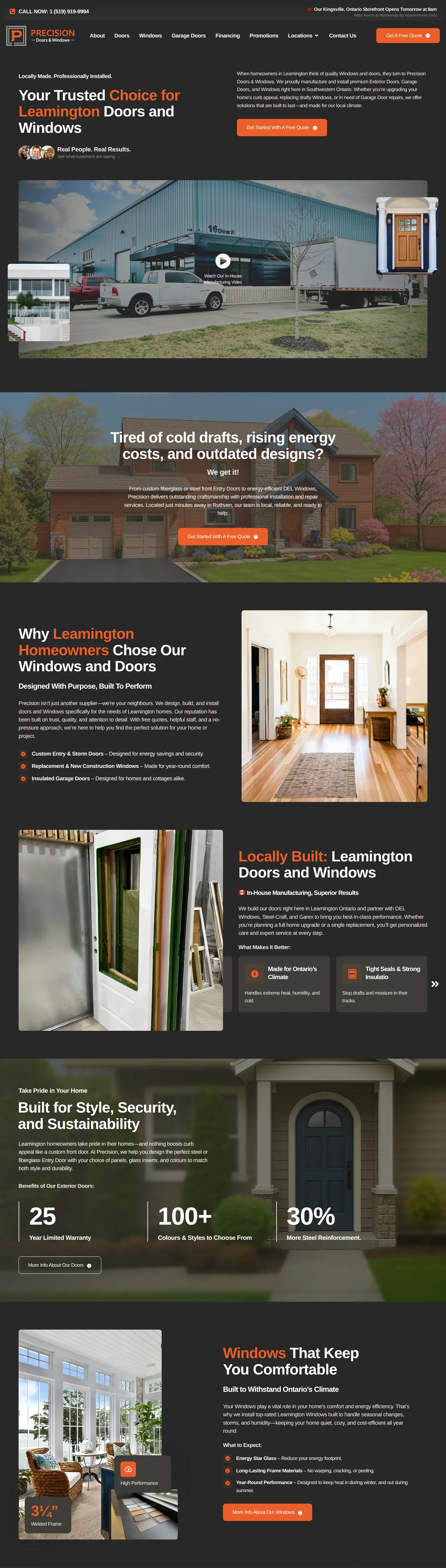
Precision wanted to reach more homeowners across the region, including Windsor and Chatham-Kent. Across the project, we developed more than 10 location-specific pages as part of the site’s local SEO foundation.
Those pages gave the business space to explain its services in relation to the areas it serves. For a company working across several communities, that information helps a prospective customer understand whether the business is relevant to their project.

We also built custom pages to support advertising and promotions. Another company initially managed Precision’s Google Ads; our role was to create the website pages supporting those campaigns.
Separating those responsibilities matters when planning marketing work. An advertising campaign needs an appropriate place to send visitors, with information about the offer and a clear next step. The website and advertising teams need to understand how their work connects.
As new opportunities developed, we could add content, introduce promotions and refine the existing site. Our ongoing work also includes website hosting.
Visit the Precision Doors & Windows website.
A practical starting point for your own project
If you’re preparing for a website project, start with what you want customers to understand and do. Identify the products or services the first version needs to explain, the questions your team regularly answers and the people who can help supply that knowledge.
From there, you can agree on what content and photography need to be developed for launch, and which ideas belong in a later phase.
That collaboration was central to the Precision project. Abe brought his knowledge and ambition, and we worked together to turn them into a website that represented the business and could continue developing with it.
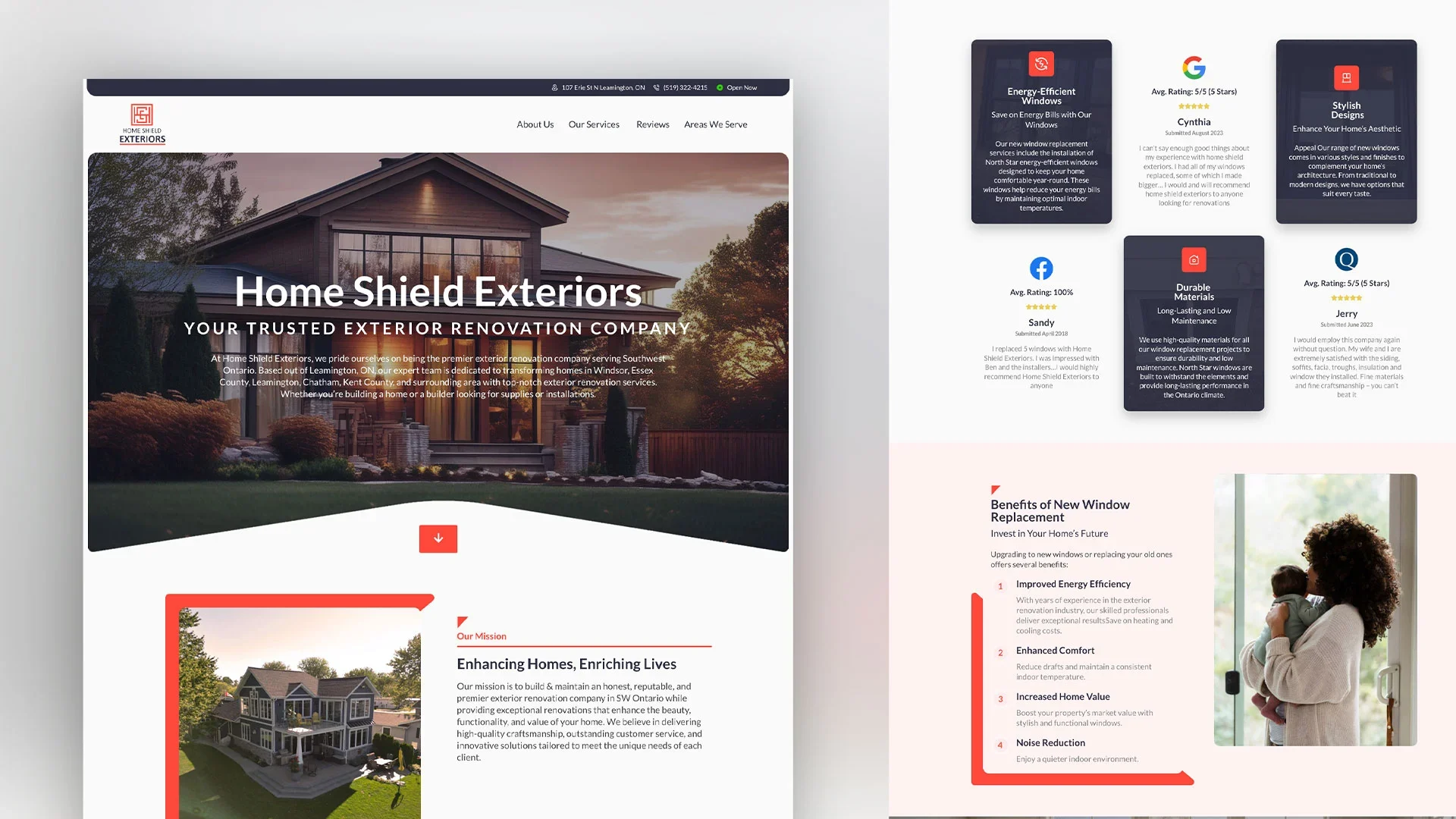
You can also explore our Home Shield Exteriors website project for another example of presenting home improvement services and helping customers enquire.
If you’d like to talk through the first phase of your website, tell us what you’re planning. We can help identify the priorities and the content needed to support them.


 Abe Bergen